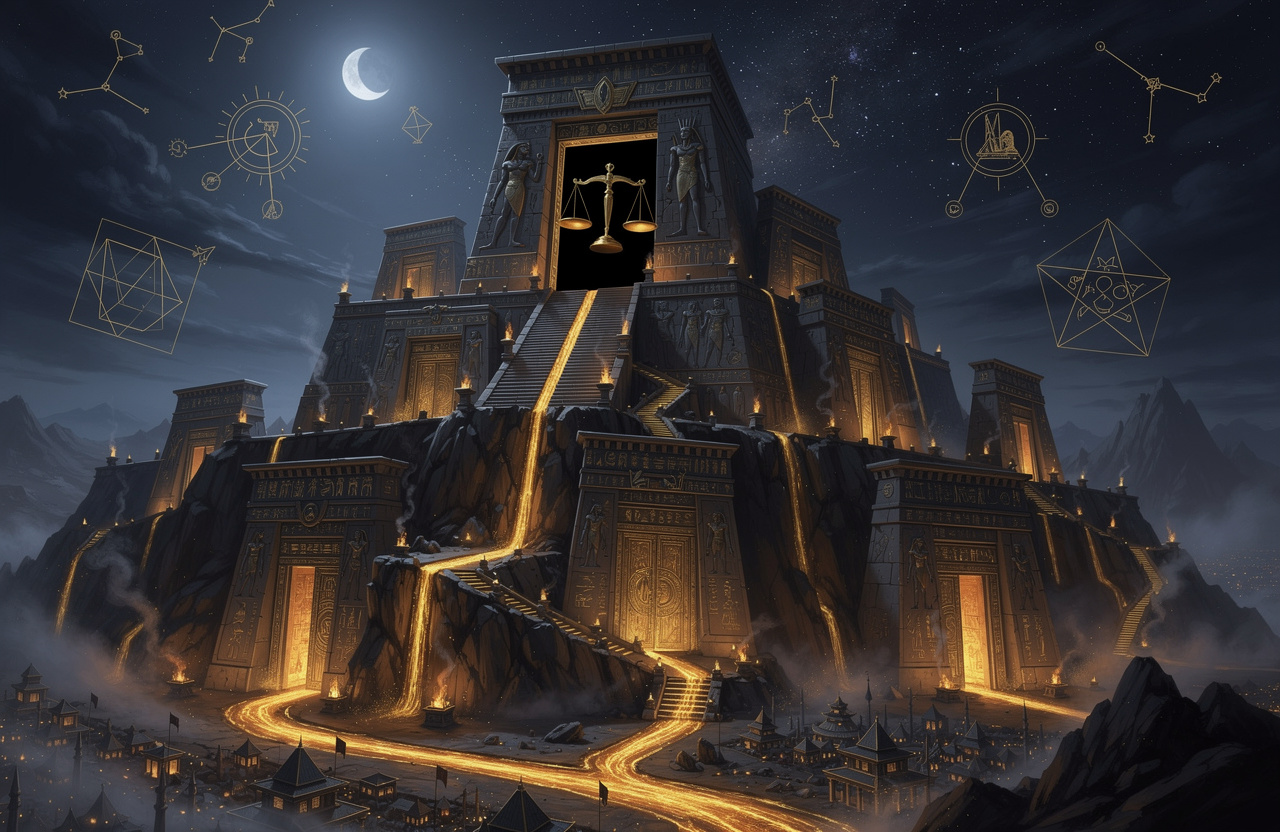
Every large system has a component the user never sees but without which nothing works: a root DNS server, a certificate authority, a coordinator that sets the rules for all the other nodes. It isn't in the news, it has no advertising and no app. That is exactly what the Bank for International Settlements is — the BIS, in Basel, Switzerland. If the Fed is the central bank of the United States, then the BIS, without much exaggeration, is the central bank of the central banks themselves. And almost no ordinary person has ever heard of it.
Where it came from
The BIS was founded in 1930. The official pretext was technical and dull: to organize settlements of German reparations after World War I — hence the name "bank for international settlements," a bank for cross-payments between countries. The reparations business quickly faded, but the institution stayed — and quietly turned into something far more important.
Its clients are not people or companies. Its clients are the central banks of countries. The Fed, the European Central Bank, the Bank of England, the Bank of Japan, the Bank of Russia, and dozens of others hold accounts at the BIS, run operations through it, store part of their reserves there and, above all, meet one another there.
A club where the money-printers meet
And that word "meet" is the most interesting part. Regularly, the heads of the world's largest central banks gather in Basel. Behind closed doors, no journalists, no public minutes in real time. Formally — an exchange of views. In fact — coordination of policy among those who manage the money supply of entire continents.
Picture it: the people who hold the levers of issuance for most of the planet sit regularly at one table and align their approaches. This is not a conspiracy theory — it's a publicly known function of the BIS, which describes itself exactly this way: a forum for central bank cooperation. The only catch is that "cooperation" among a few dozen people who control the world's money is itself a concentration of power before which any single government looks small.
What the "Basel standards" are
The BIS is not only a club but a rule-maker. It is the source of the so-called Basel Accords (Basel I, II, III) — standards that determine how much capital banks around the world must hold in reserve, how to count risk, which ratios to meet. These rules are then built into the national regulations of dozens of countries, including Russia.
Consider the mechanics. A group meeting in Basel writes technical standards — and then sovereign states voluntarily embed them into their own law, because otherwise their banks would fall outside the global system. This is power through a standard in its purest form: not a command, but a norm it would be unprofitable not to adopt. The same "de facto standard," only for banking regulation across the entire planet.
A special status: a state within a state
There's a detail that surprises many. The BIS holds a special international status close to diplomatic immunity: its premises, archives, and operations are protected from interference by the host country's authorities, its assets are not subject to seizure in the ordinary way, and its staff enjoy immunities. In essence, it is an enclave removed from ordinary jurisdiction.
Let's separate fact from myth. Fact: the BIS genuinely coordinates central banks, sets global banking standards, and holds an extraterritorial status with broad immunities. Myth: that it is the "headquarters of a world government" where specific people pull all the planet's strings. The reality is subtler: the BIS is a coordination node, an infrastructure layer that makes aligned policy technically possible. Not a villain in a cloak, but an architecture in which power concentrates naturally, because that's more convenient for those who already hold it.
Where is the ordinary person in this
Infinitely far away. Between the ordinary person and Basel there are several floors: his bank, the national central bank, and only then the BIS. The decisions aligned there reach him as a loan rate, regulatory ratios, the availability of money — like weather whose source is invisible. He never voted for those sitting at the Basel table and doesn't even know their names. This is the ultimate form of power without accountability: it is real, it is global, and it is almost invisible.
The answer: the MAAT token and DAO
The BIS shows the endpoint of this whole series' logic: the higher the level, the narrower the circle and the less transparency. Coordination of the world's money has come down to a closed club in a Swiss city. The symmetric answer is coordination from below, but open: not a club for a few dozen, but a network for millions, where the rules and the treasury are visible to all.
That is MAAT. The MAAT token is membership in a cooperative and a vote under the principle of one human, one vote, not "one dollar, one vote." Governance runs through a DAO — a decentralized organization with a transparent treasury, where there are no closed sessions and no extraterritorial immunities: the rules are written in open code, every movement of funds in a public ledger, and any member can verify everything. Where the BIS coordinates the few behind closed doors, MAAT coordinates the many in plain sight. The entry is simple: read the book, take the token, get your vote — and become a node in a network that answers the closed bankers' club with its own weapon, coordination, only turned in favor of ordinary people.