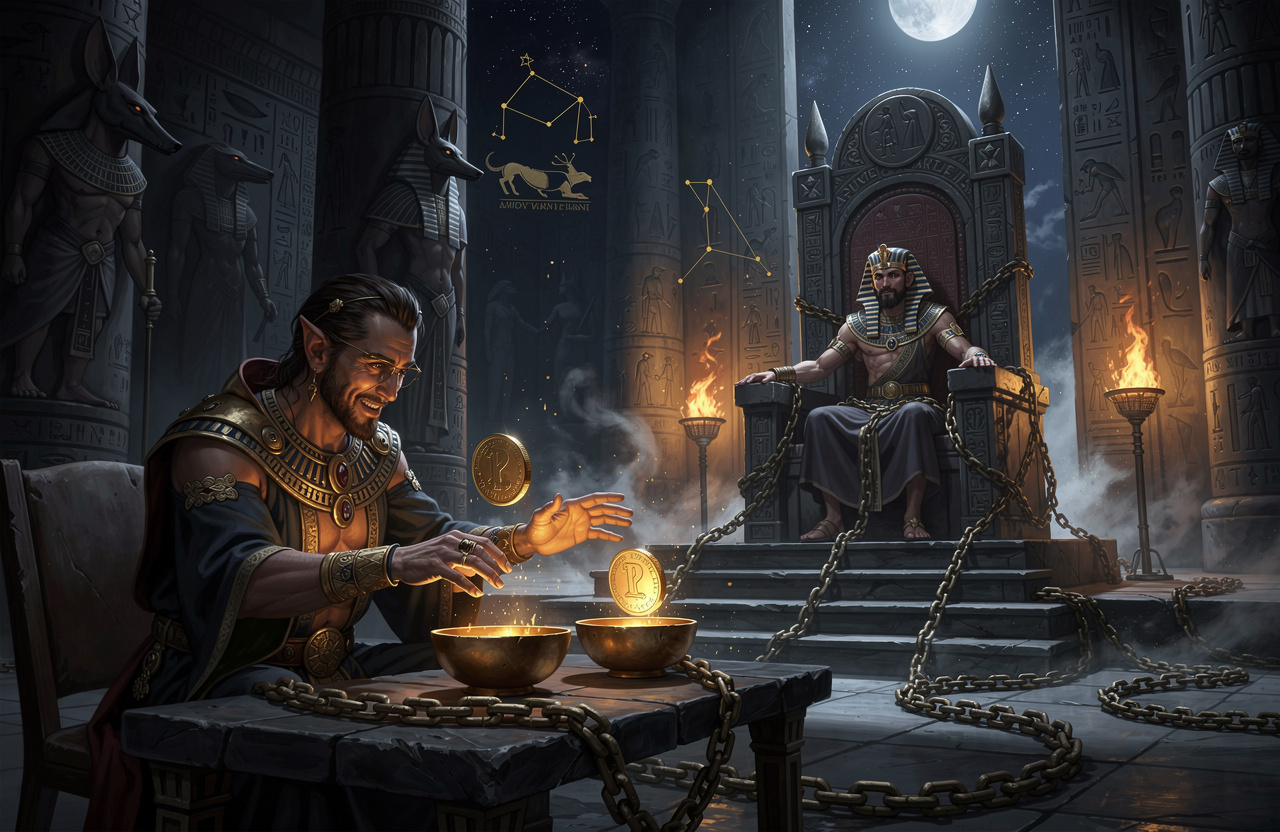
When a country can't pay its debts, two soothing words appear in the news: "technical default" and "restructuring." They sound like medical terms — as if the patient is simply having his treatment adjusted. In fact they are two sides of one trick, and the trick is as old as the street shell game. The ball is never under the cup you bet on. And the one who always wins is the one moving the cups.
"Technical" — the anesthetic word
Start with default. A default is when a debtor doesn't pay on time. Simple, blunt, clear. But put the adjective "technical" beside it, and the meaning blurs.
A "technical default" is presented as a misunderstanding: the money exists, the payment just got stuck — signed in the wrong place, sanctions in the way, an intermediary bank blocked it. As if it were a connection glitch, not insolvency. Sometimes it really is. But far more often "technical" is anesthesia for the public. A word that softens the blow and delays the panic, while behind the curtain the real game runs: who forgives whom, how much, and what they demand in return.
An engineer would be on guard at once. A "technical glitch" in finance is, far too often, not a network bug but a feature of a negotiating position. While everyone discusses "technical details," what's actually being discussed is power.
Restructuring: how "forgiveness" becomes a leash
Now the main shell — restructuring. It sounds humane: creditors meet you halfway, extend the terms, lower the payments, sometimes even write off part of the debt. The press writes about "easing the burden." The debtor sighs with relief. And wrongly.
Because restructuring is almost never free. For extended terms and "forgiveness" of part of the debt, the debtor pays in conditions. And here the cups start to move:
- A new schedule — but against new guarantees: state assets, export revenues, sometimes whole industries are put up as collateral.
- Part of the debt is "forgiven" — but in exchange the country signs onto a program of "reforms": privatization, spending cuts, opening of markets (that machinery has its own articles).
- Payments are lowered today — but the term is stretched, and over all the years the debtor often hands over more than he originally owed.
So "debt forgiveness" in practice often means trading money that's hard to collect for control that stays forever. The creditor swaps a shaky claim for a firm lever of management. This is not charity. It's a leash upgrade.
Why it's a game the debtor never wins
Back to the shells. The point of the street game is not sleight of hand — the point is that the rules are written by whoever moves the cups. A player may guess once or twice, but over the long run he always loses, because he does not control the table.
In debt negotiations, the table is controlled by the creditor and the institutions behind it. They decide what counts as default, what rating to assign the country (and the rating sets the interest at which it can borrow next), what conditions to staple to the restructuring. The debtor comes to that table in the worse position: he needs money now, or the whole economy seizes up. Time works against him. The creditor has all the time in the world.
That's why almost any outcome of the talks is a version in which the debtor remains a debtor, just on updated terms. The ball is shuffled from cup to cup, but it never leaves the table. The debt doesn't vanish — it changes shape and locks in dependency for a new term.
And again, honestly, on fact and myth. The myth: "it's all personally rigged by villains gleefully rubbing their hands." The fact is sturdier: it's enough that one side of the table controls the rules, the ratings, and the time, while the other arrives on the brink of collapse. With that asymmetry, the outcome is decided without any personal villainy. The structure assigns the roles on its own.
Where the ordinary person is in this
In exactly the same place, just in miniature. When your loan is "restructured," your mortgage extended, "payment holidays" offered — it's the same shell game. The payment today is smaller, the mountain of debt tomorrow is bigger, and you're tied to the bank more tightly for years to come. And, as with countries, you have no access to the table: the rules, the rate, and the conditions are written not with you but for you. You're the player who bets but doesn't move the cups.
The answer: the MAAT token and DAO
The shell game works only while the table is closed and the rules opaque: you can't see which cup holds the ball, and you don't decide how they're moved. It all rests on the asymmetry of information and the power at the table.
MAAT removes the closed table altogether. The MAAT token is membership in a cooperative with a transparent treasury, where there are no "conditions in fine print" and no hidden shuffles: every movement of funds and every rule is visible to all in the DAO — a decentralized organization with no secret center. Decisions are made by the community, by the rule one human, one vote, not "whoever has more money and power at the table moves the cups."
A shell game is impossible when the cups are glass and the table is shared. That is the architecture of MAAT, translated into the language of debt. The entry is simple: read the book, take the token, get the vote — and stop being the one forever betting at someone else's table by someone else's rules.