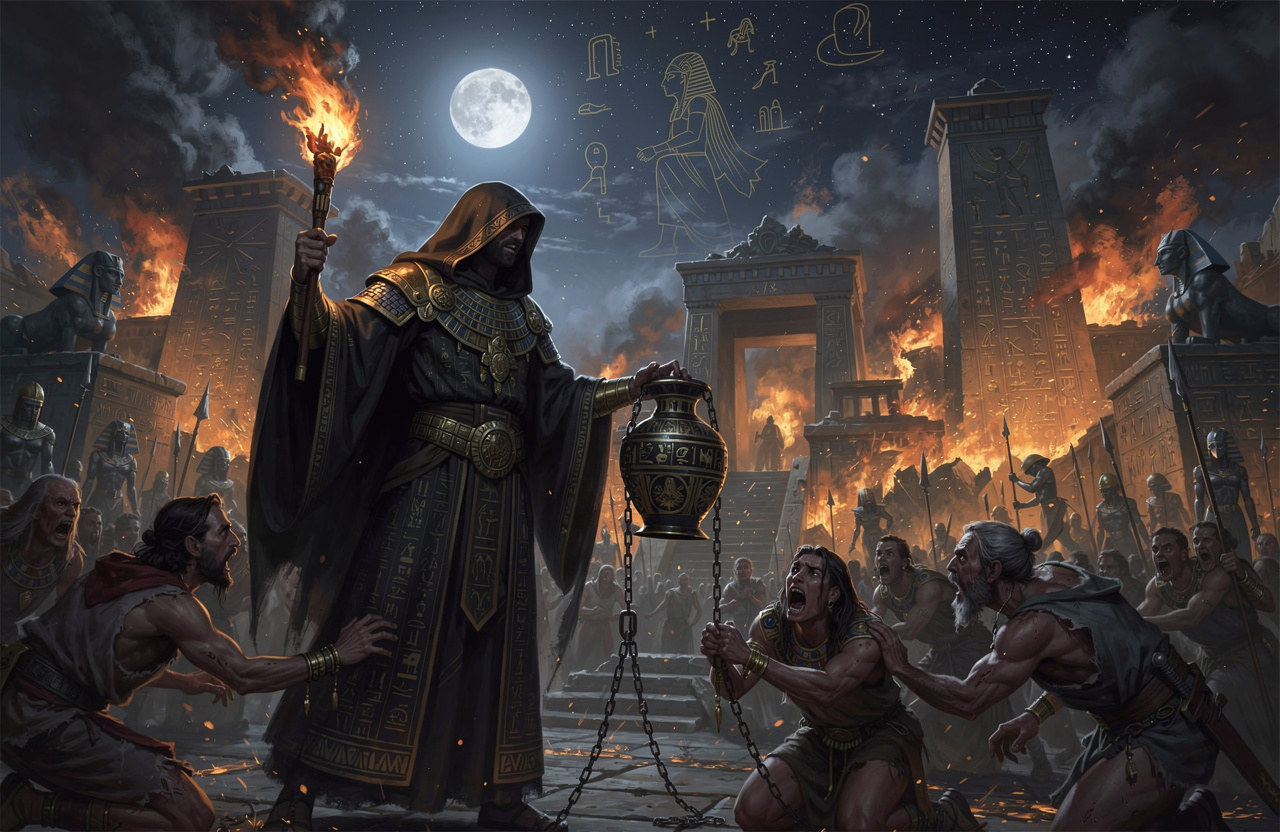
Picture a fire brigade that shows up to every major blaze in town, puts it out with dramatic photos for the press — and then you discover that every house it visited had its basement soaked in gasoline before the fire ever started. And the same brigade poured it. Sounds like a thriller. At the level of a single house, it's a crime. At the level of whole countries, it has a different name — the International Monetary Fund.
Who gets called when everything has collapsed
The IMF was founded in 1944 as a mutual-aid mechanism: if a country has a temporary balance-of-payments problem, the fund lends it money to get through the rough patch. On paper the idea is noble. A node in the shared network that insures the other nodes against falling. That is still how it is sold to the world.
But over the decades the role drifted. Today the IMF arrives not when a country has a mild cold, but when it is already in intensive care: default, currency collapse, an empty treasury. At that moment a government has no choice. The money was needed yesterday, there are protests in the streets, imports of medicine and fuel hang by a thread. And here comes the fund with a suitcase of dollars — and a contract to be signed unread.
It's a classic move: help is offered at the exact moment refusal is impossible. An engineer would call it exploiting a vulnerability. You break into the system not through the front door, but through the bug that only opens under pressure.
The conditions written in small print
An IMF loan is almost never "just money." Attached to it is a list of conditions — in the professional dialect, a "structural reform program." The set repeats from country to country with suspicious precision:
- privatize state assets — ports, airports, water, energy;
- cut social spending — pensions, public-sector wages, subsidies;
- open the markets to foreign capital;
- devalue the currency.
Each item sounds technical and neutral. But translate it from finance into human, and it all comes to one thing: sell the common property, slash protection for the weak, and throw the doors open to whoever holds dollars. That is, to the same funds and banks standing behind the lender.
Why this works as a trap, not a cure
The core bug, for the victim, is baked into the mechanics: the loan is issued in dollars. The country earns in its own currency but owes in someone else's. Let the Federal Reserve in Washington raise rates, and the debt grows heavier automatically — without any consent from the debtor. One person, with one decision, can increase the debt burden of dozens of countries at once. The book calls it remote code execution at the level of a state: someone else's code running inside your economy.
Then comes the self-sustaining loop. To pay the old loan, the country takes a new one. Conditions tighten. An economy that had its social spending cut and its assets sold off grows worse, not better — because domestic demand is dead and the revenue from privatized infrastructure flows abroad. The debt doesn't shrink; it grows.
The numbers confirm it. Since 1958, Pakistan has gone through more than twenty IMF programs — a record. Rescued twenty-some times — and each time it needs rescuing again. That is not a cure; it is maintaining dependency. Treating an alcoholic with vodka. The data on African countries under fund programs in 1985–1995 says the same: per-capita income fell, debt rose, education spending was cut. Thirty countries — one result.
A firefighter with a stake in the fire
Back to our metaphor. Why would a firefighter light the match? Because he is paid not for fires put out, but for the act of fighting them — and for what remains afterward.
After every "rescue" the country emerges poorer, more dependent, its assets sold off. And on the other side of the deal sit those who bought those assets "amid the crisis," meaning for pennies. That is how a fence for stolen goods works: he knows the seller is desperate and pays twenty cents on the dollar.
The ancient Egyptians would have called this position Isfet — not fairy-tale "evil," but the inversion of fair exchange. Normal exchange: you gave, you received in proportion. Isfet: a structure latches onto a working organism, draws the resource, and puts nothing back. In this scheme the IMF is not a villain with a moustache. It is a polite institution staffed by economists in suits, doing exactly what a parasite does: it arrives on weakness, replaces the will through loan conditions, and stays invisible because people blame the trouble on "a bad government" and "bad luck."
Where is the ordinary person in this
Everywhere and nowhere. The Greek whose pension was cut by 40%. The Argentine whose savings burned in yet another default. The African child saved on by closing a school for "budget discipline." None of them are an abstraction. They are people whose lives were redirected up the pyramid by a stroke of the pen in Washington.
And here is the key: not one of them sat at the table where the contract was signed. Nobody asked them. An intermediary decided for them — exactly as the fund, not the shareholder, casts the shareholder's vote.
The answer: the MAAT token and DAO
The IMF's power is not genius. It is that on its side of the table sits an organized, coordinated structure — and across from it always a lone, cornered victim. One creditor with a ready template against scattered millions the template will grind down.
The answer is symmetric: ordinary people need their own network, just as coordinated but built the other way around. That is MAAT. The MAAT token is membership in a cooperative and a single vote, on the principle of one human, one vote — not "one dollar, one vote" like the funds. Decisions are made in a DAO, a decentralized organization with a transparent treasury where every movement of funds is visible to all, and no intermediary signs a contract behind your back. The entry is simple: read the book, take the token, get your vote — and stop being the house whose basement was quietly soaked in gasoline.