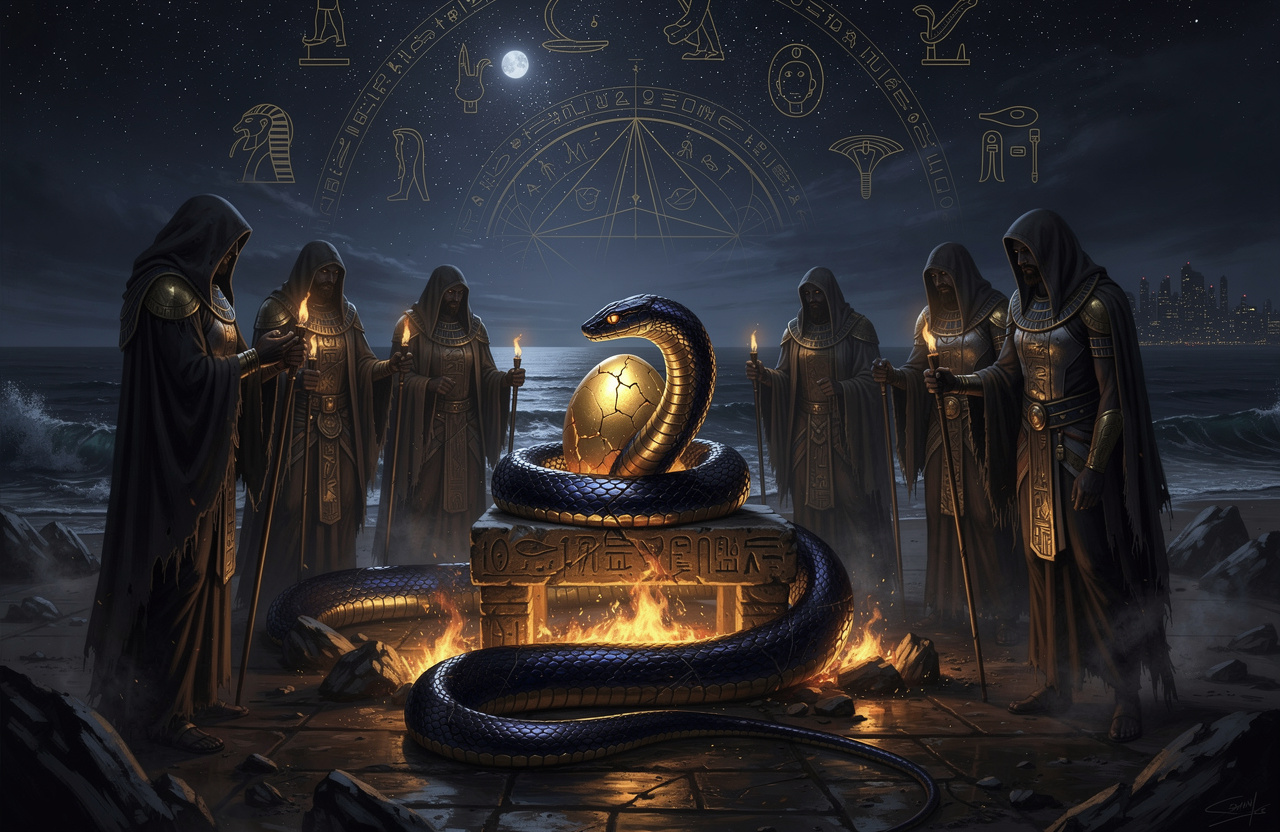
There's a genre of code that's written not in the open but in a private repository, under fake usernames, so competitors won't even guess development is underway. When the product ships, it looks like a natural public good — and the fact that its architecture was agreed on in secret by a handful of interested parties stays off-screen. That, in essence, is how the U.S. Federal Reserve System was born. And this is not a retelling of a conspiracy pamphlet — it is a documented historical episode.
A trip "to go hunting"
In November 1910, several men boarded a private railroad car under the pretext of a hunting trip. They were told not to use each other's surnames — first names only, so that the staff and any chance fellow travelers couldn't match faces to names. The destination was Jekyll Island off the coast of Georgia, a private club for the very rich, where no one would disturb them.
Who went? Senator Nelson Aldrich, father-in-law of John D. Rockefeller Jr. and the key figure in Congress on monetary matters. A senior Treasury official. And the bankers: representatives of the Morgan, Rockefeller, and Kuhn-Loeb interests and — note especially — Paul Warburg, from a European banking family, brought to America specifically for his knowledge of how the Old World's central banks worked.
For about ten days this group, in total secrecy, drafted a central bank for the United States. Not a public commission with debate, not parliamentary hearings — a few private bankers and a couple of officials behind closed doors.
Why so secret
A fair question: if the idea of a central bank is good, why hide? The answer is pragmatic. In early-20th-century America, the words "central bank" were almost a curse — the country had a hard history with them, and the public and many politicians disliked Wall Street bankers. If it had become known that the "rescue from panics" plan was being written by the biggest bankers themselves, it would have been killed on sight as an obvious power grab.
So the first version (the so-called "Aldrich Plan") was presented as a senator's initiative, not the banks'. When the plan in that form failed anyway, it was lightly refaced, renamed, and pushed through as the Federal Reserve Act — signed in December 1913. The substance stayed the same. The wrapper and the paper authorship changed.
What exactly they designed
Let's separate fact from myth honestly, as we should. Myth: on Jekyll Island a clutch of villains founded a "world government." The fact, duller and more important: they designed an institution that hands control of money issuance and bank reserves to a private banking consortium, then wrapped it in a state-sounding name.
The Federal Reserve is cleverly built. On the outside, "Federal," sounding like part of the government. On the inside, a system of twelve regional reserve banks whose shareholders are commercial banks. The result is a hybrid in which a public sign covers a private filling. That was the central engineering trick of Jekyll: not to seize the state's money crudely, but to stand between the state and its money under the guise of a neutral arbiter.
How we even know about the secret meeting
An important detail for those rightly wary of "secret meetings." Jekyll is known not from rumor. Several participants later admitted the trip themselves — in memoirs, interviews, essays. One of the bankers, Frank Vanderlip, openly described the secrecy of the trip and how they hid their names. So it's a rare case where the "conspiracy theory" is confirmed by the testimony of the conspirators themselves. That's exactly why Jekyll is a fine teaching example: it shows that designing power in secret, behind society's back, is not fantasy but a working practice.
Where is the ordinary person in this
Nowhere — and that's the whole point. A system that determines the cost of money, inflation, and the availability of credit for hundreds of millions of people was designed without a single representative of those people. A decision affecting everyone was made in a room that almost no one was allowed into. The ordinary person was left the role of end user: use the product, pay for it, but you weren't in the development and you won't be shown the architecture.
The answer: the MAAT token and DAO
Jekyll's main lesson is not "bankers are bad" but "power designed in secret is almost impossible to make accountable afterward." The antidote is obvious: design governance in the open, in full view, from the very first commit.
That is the principle of MAAT. The MAAT token is membership in a cooperative and a vote under the principle of one human, one vote, not "one dollar, one vote." Governance runs through a DAO — a decentralized organization with no private railroad car and no hunting club: the rules, the treasury, and every decision are written to an open ledger and visible to all at the same time. Where Jekyll hid its authors behind aliases, we make the process transparent by default — because what is agreed in secret works against you in secret. The entry is simple: read the book, take the token, get your vote — and find yourself in the room you were never invited to before.